AI is not killing the mainframe, and the market marked it down anyway.
IBM's mainframe revenue fell forty-two percent and the stock had its worst day on record. A large AI order book could not offset it.
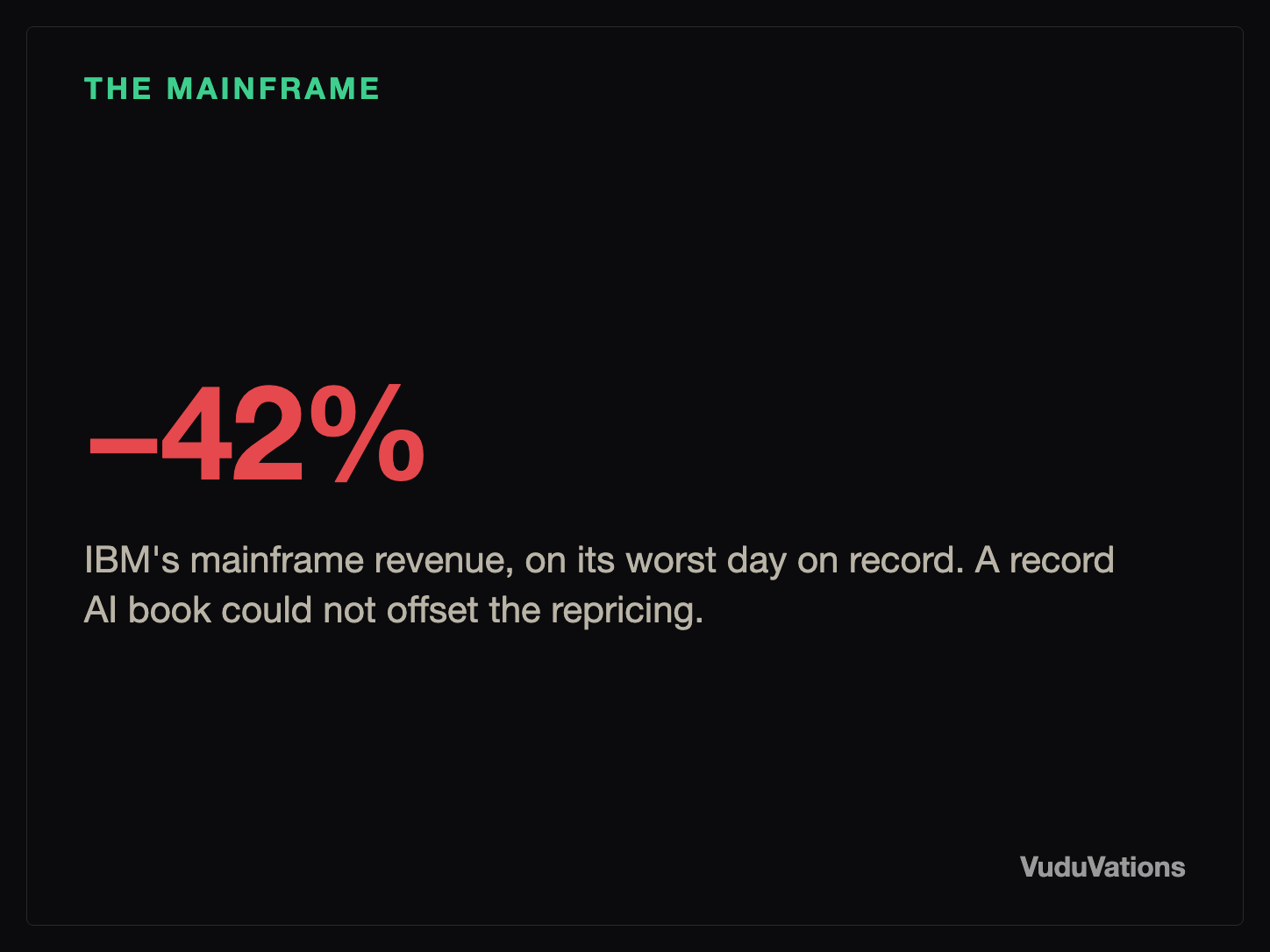
IBM ran the same play one industry over. Its early second-quarter warning crashed the stock twenty-five percent in its worst day on record, and the final report confirmed why: mainframe revenue fell forty-two percent and the full-year growth outlook was cut. Against it, IBM pointed to a strong hardware cycle and a large and growing AI order book. It did not matter.
AI is not killing the mainframe, the company insisted, which is the same defense the services firms make about their bench, translated into hardware: the incumbent insisting the old asset is fine while the market discounts it. A record AI book could not offset the repricing of the thing underneath it.
The pull-forward makes it worse, not better. IBM said customers had bought mainframe hardware early, ahead of price increases, which means the strength of prior quarters was borrowed from this one. That is the harvest move, monetizing the installed base now, dressed as a temporary miss. And the firm that owns Granite, watsonx and Red Hat, the closest thing in the market to a company that owns its own AI stack, still could not make the AI line matter against a legacy repricing.
The lesson is not that IBM is weak; it owns more of its stack than any services firm. The lesson is that owning the model does not save you when the value the market prices still lives in the old asset. Substitution, not addition; believe the tape, not the book.