EY cut sixty percent by routing. OpenAI cut eighty percent by pricing. Same week.
Demand side and supply side squeezed the model at once, which is the whole argument for owning the switch, not the model.
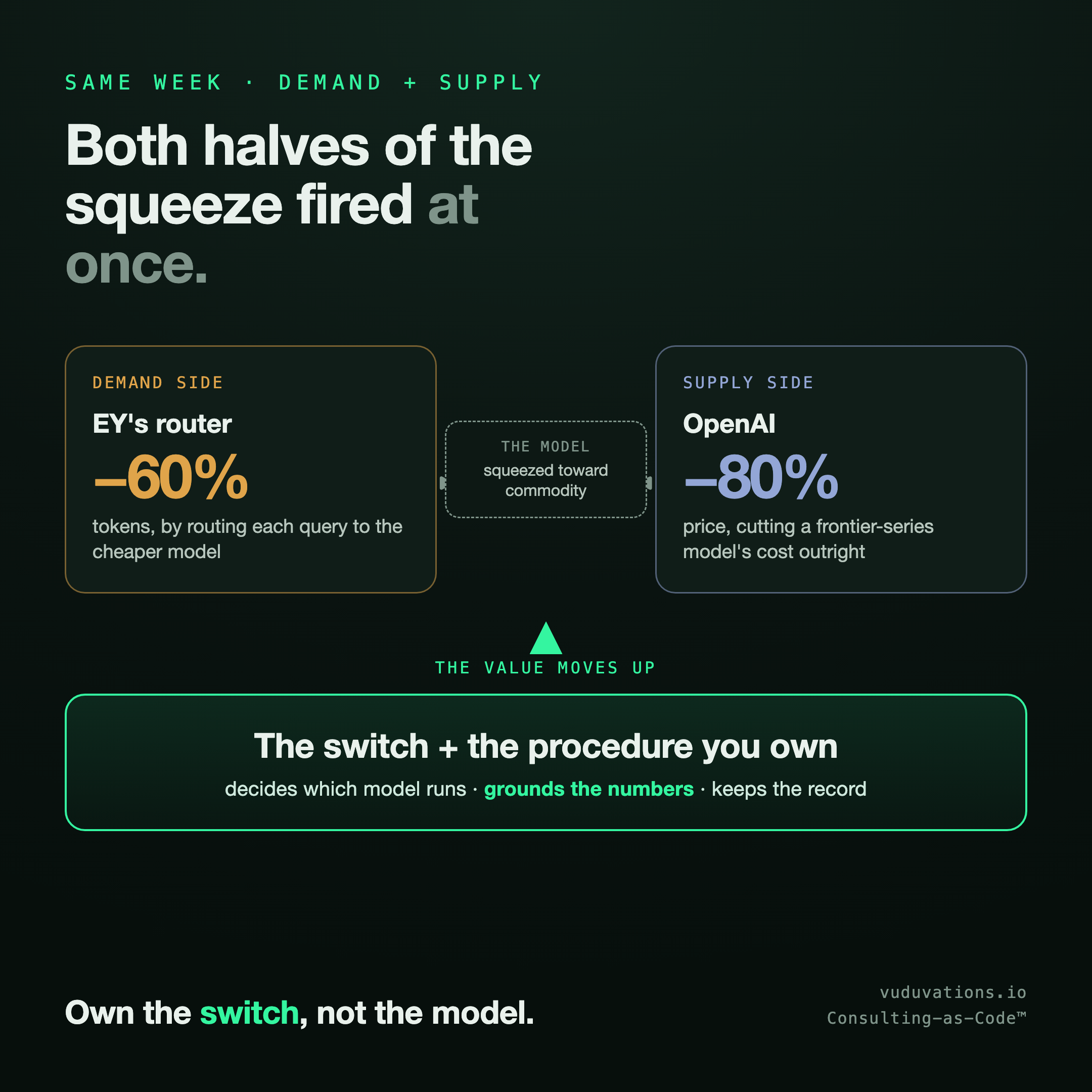
Two AI cost cuts landed the same week, from opposite directions, and together they make one point. On the demand side, EY's global consulting AI leader told Business Insider the firm deployed an invisible router that sends each query to the right model for the job, cutting token use by up to sixty percent. On the supply side, days later, OpenAI announced major price cuts, taking its cheapest frontier model down eighty percent into the low-cost tier populated by smaller models from Google and a field of Chinese and open-weight rivals.
One made the model cheaper to use, the other made it cheaper to buy, and both squeeze the same thing: the price of the model itself, toward commodity. VentureBeat named the shift plainly, that the market is moving from model access to model economics. Access to a frontier model is no longer the edge. What it costs, and how predictably it runs, is.
Here is the part that matters. When the demand side and the supply side are both driving the model's price toward zero, owning the model is not the position. The value moves up one floor, to the layer that decides which model runs, grounds the numbers so a cheaper one is safe to use, and keeps the record. That layer is yours to own. The model underneath is a swappable, deflating input.
It is worth naming what EY's router does not do. Routing to a cheaper model to save money is only safe if the figures underneath are grounded in a source the company can point to, where no model in the rotation can author, move, or drop a number. Save sixty percent on tokens and get back a confidently wrong number, and you did not save anything. Own the switch, and own the floor beneath it. That is the difference between a cheaper bill and a provable one.