The workforce got repriced before it got restructured.
PwC’s Jobs Barometer reframes the org chart while the cost of running AI becomes the operating discipline, and the price action delivers the verdict the executives keep answering in the future tense.
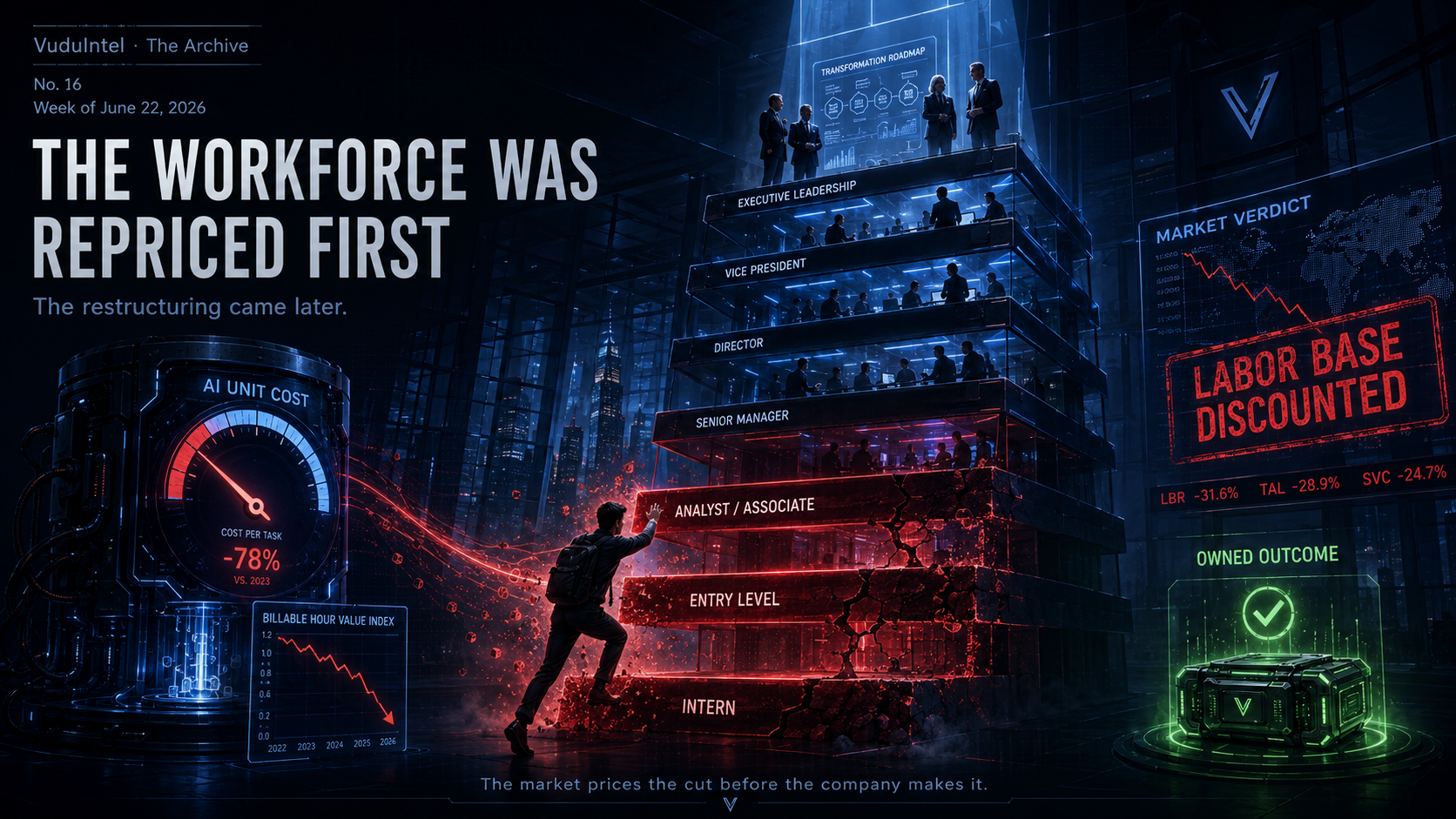
The signal narrowed this week to a smaller set of loud voices while most of the strategy houses went quiet. PwC’s 2026 Global AI Jobs Barometer, published June 15, set a coordinated frame across Mohamed Kande, Joe Atkinson and EY’s Truncale: amplify human expertise over automation, and, in the same breath, accept the quiet seniorization of entry-level work. The optimists were loud and specific, and they were all describing the same disruption while claiming the flattering half of it.
What sits underneath the reassurance gives it away. PwC’s own Dan Priest said the quiet part out loud: if AI changes the first rung of the career ladder, firms have a responsibility to redesign the pathways into work. The entry-level rung, the routine drafting and checking that juniors cut their teeth on, is exactly the work AI automates first. Remove it and you have solved a cost problem by creating a slower one, because that rung is also where the next generation of senior judgment has always been trained.
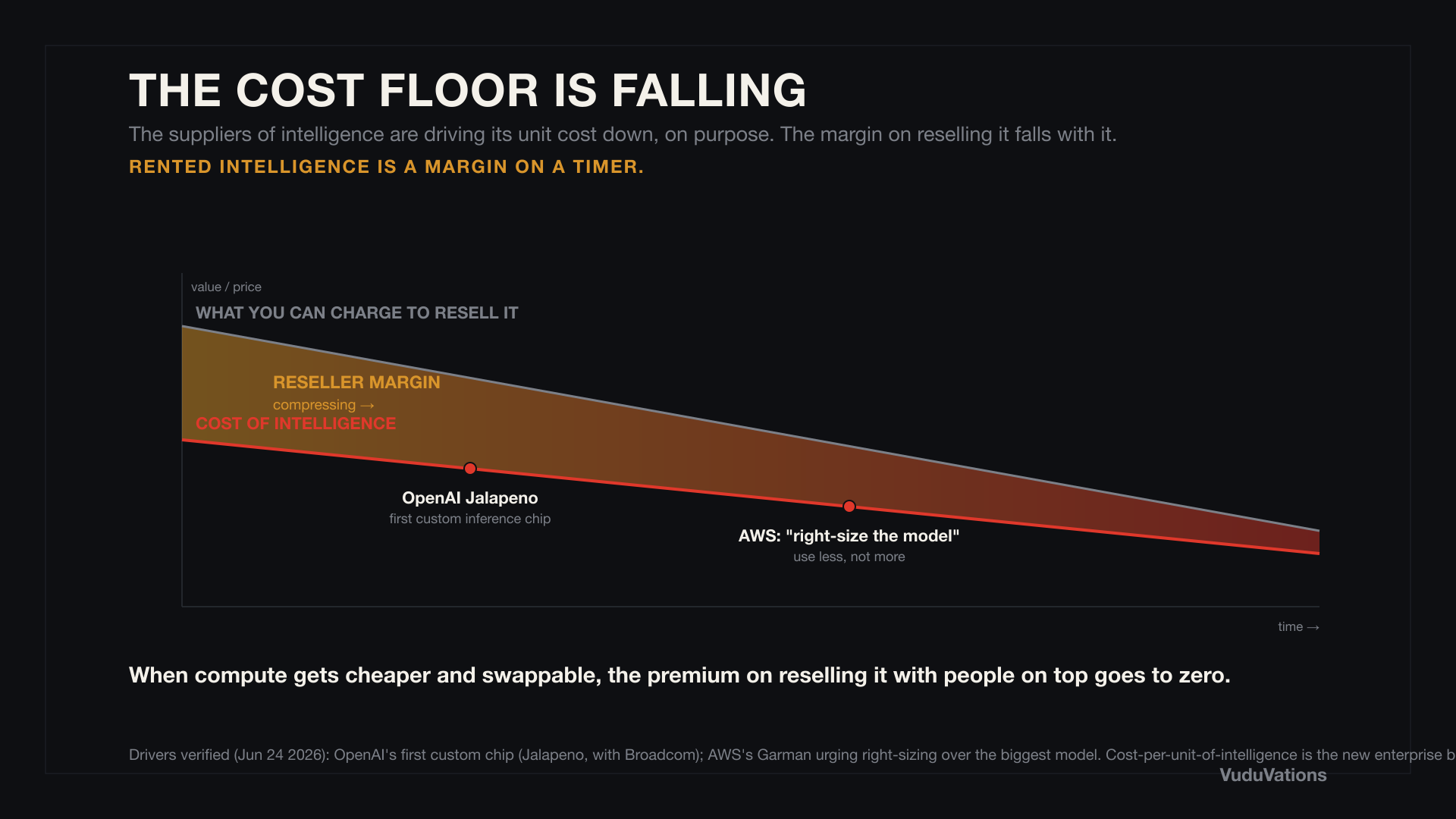
The theme did not stay rhetorical. Accenture stood up a practice devoted to helping clients optimize their use of tokens, naming cost-to-run as a discipline rather than an afterthought. KPMG put numbers on it with its Q2 Global AI Pulse, making cost visibility the dividing line for AI returns and finding that only about a quarter of firms name the CEO as accountable for AI outcomes. Cognizant’s Jatin Dalal answered the deflation fear directly, pricing the model run alongside the hour. For two years the only question that mattered was whether AI could do the work. This week the question shifted to what it costs to run.
Then the tape spoke, and it was blunter than any of them. HCLTech sat at a 52-week low having net-hired thousands, the full deflation haircut without a single headcount cut. Accenture fell about 18% in a single session, its worst since 2016, on a quarter where revenue actually grew. Even IBM, which had re-rated to an all-time high on its quantum story, gave back about a quarter of its value into late June. A firm could grow revenue, beat estimates, and hire into the quarter, and still be marked down as a labor cost waiting to be cut.
The decisive finding is the one this desk keeps landing on: the repricing leads the restructuring. The market is pricing the layoffs before they are made, discounting the billable base as a liability in waiting, whether or not anyone has been let go. The executives describe a transition they intend to manage. The market is pricing a transition it has already decided the outcome of. Both halves of the week pointed at the same fact from opposite ends, the value is leaving the billable hour.
Every firm spent the week describing the same symptom, the disappearing bottom of the pyramid and the rising cost of the intelligence on top, while selling the cure as more transformation work for itself. The one thing none of them handed the client is what the market does not reprice: an outcome the client owns outright that runs without the bench. That gap is what the week kept circling and never closed.
Every firm in this issue rents its intelligence and bills the bench. The one value the market does not reprice is an outcome the client owns that runs without the headcount.